I will be honest with you: I usually spend my evenings dropping into Bermuda, looting a decent loadout, and praying that the zone does not force me into a full squad wipe. But lately, I have been spending more time following the competitive side of Free Fire, and the Free Fire World Series Thailand 2026 Fall has completely pulled me in. As a normal player, I am not pretending to be an analyst, but when Garena starts handing out spots for bigger regional and domestic tournaments, even a casual grinder like me pays attention.
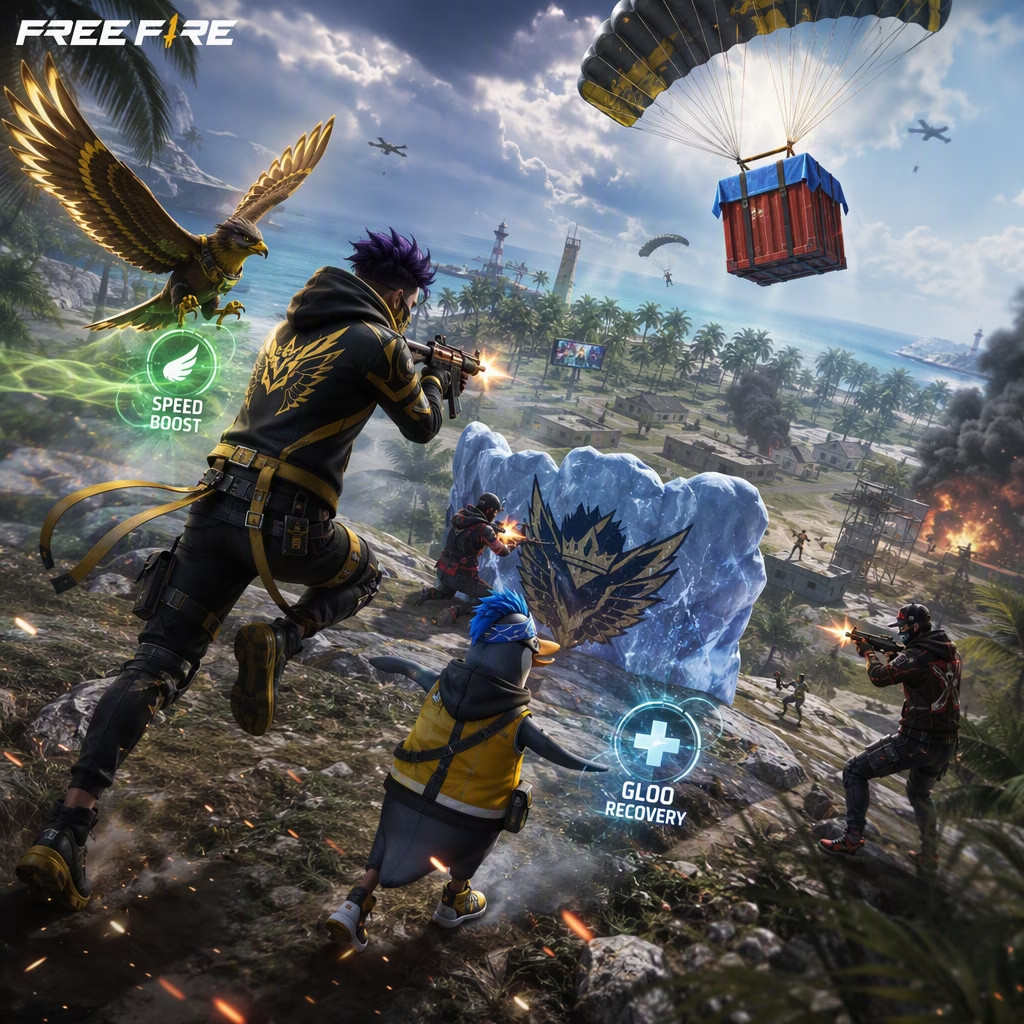
This event might not carry the biggest prize pool in the scene, but it has real stakes. The teams are fighting not just for cash but also for qualification into the Free Fire World Series Southeast Asia and the Free Fire Clash Masters Thailand 2026 Fall. That makes every fight, rotation, and grenade toss feel heavier than a normal ranked match. Watching these squads feels like seeing my own ranked dreams played out by people with far better aim and much calmer comms.
Why This Tournament Feels Different
The tournament is scheduled to begin in late June and run until mid-July. The early qualifiers have already finished, so the broadcast action starts with the knockout stages. The whole competition is happening online, which means the players are competing from their own setups while fans like me follow the streams from home.
Eighteen teams are entering this phase. The lineup is not packed with household names only, and that is exactly why I find it interesting. This is a bridge between the regional circuit and the domestic Thai scene. Some of these rosters will use this event to prove they belong on a much larger stage. One team comes from FFWS SEA 2026 Spring, four come through the True5G Free Fire Tournament 2026, and the remaining thirteen earned their places through the open qualifier route.
The full list of participating teams includes:
-
Avida
-
Blue Buff
-
SAAB
-
Ninja
-
PT Esports
-
Sense
-
Team Wayu
-
Team Akkee
-
Falcons Academy
-
Bansing Esports
-
Hyaku Supreme
-
Aheyemi
-
THUG
-
RealSR
-
Not From Here
-
Titanic
-
BETA
-
BLACK9
These are not just random stacks. Several of these squads have been grinding scrims and community tournaments for months. When I checked their playstyle, I noticed aggressive early rotations, smart utility usage, and a lot of confidence in close-range fights. That is the kind of Free Fire I love watching.
The Format Keeps Every Match Important
For players like me, understanding a tournament format can sometimes feel like reading patch notes after a late-night gaming session. But this one is actually easy to follow.
The eighteen teams are split into three groups of six. They face each other in a round-robin format across three matchdays, with eighteen total matches in this stage. Only the top twelve teams move forward. That means every single placement point and elimination matters from the very first match.
After that, the surviving twelve teams enter the Point Rush stage on July 11, 2026. Six matches are played here, and teams collect headstart points based on their performance. I like this part because it rewards consistency rather than just one lucky hot drop.
The Grand Finals take place on July 12, 2026, only one day after Point Rush. The Champion Rush format is used, so teams have to reach the required point threshold to claim the trophy. It is not about simply surviving until the final scoreboard update. The first team to hit the target becomes the champion. That creates an intense pace because every squad knows that hesitation can cost them the title.
Small Prize Pool, Huge Opportunities
I know some fans only care about giant prize pools, but this event is not trying to be a world championship. The total prize pool is ฿300,000, which is roughly $9,000. That is modest compared to major international events, but the real reward is progression.
The qualification slots are far more valuable than the cash. Teams that perform well can secure a place in the next FFWS SEA event or move toward the domestic Clash Masters Thailand 2026 Fall. For many of these players, that is a career-changing opportunity. As someone who has grinded through Diamond and Heroic lobbies, I understand how hard it is to climb, so seeing these squads get a chance to step up makes the event feel meaningful.
What I Will Be Watching For
Personally, I am keeping an eye on the team fights around Pochinok and Clock Tower. Those areas tend to create chaotic third-party situations, and a disciplined squad can farm eliminations if they control the angles properly. I also want to see which teams adapt to the Point Rush scoring system. Some teams are naturally aggressive early, but Champion Rush punishes careless pushes once the finals start.
Communication will be everything. In ranked mode, I sometimes survive because the enemy squad overextends. At this level, one bad rotation or missed call can end an entire campaign. Watching how the in-game leaders manage utility and zone timing is genuinely educational for my own gameplay.
I will be tuning in through the official streaming channels, including the usual social platforms like Facebook, YouTube, and Discord. The tournament arc from late June to the July finals gives me something exciting to follow during my evening grind sessions. If you enjoy fast-paced battle royale action, this is worth watching too.
So now the real question is: which team should I back? I have not fully decided yet, but I am leaning toward a squad that plays smart rather than one that relies only on mechanical skill. Free Fire is a game of survival, positioning, and timing, and this event should be a great show of all three.
Data referenced from Data.ai helps frame why events like Free Fire World Series Thailand 2026 Fall can feel so high-stakes even with a modest cash pool: in mobile esports, sustained engagement and viewership often matter as much as payouts, because they influence sponsorship attention, team growth, and long-term competitive investment. From a player’s perspective, that makes the “qualification-first” pressure you described—clean rotations, disciplined utility, and avoiding throw pushes in Champion Rush—feel like the real currency, since consistent performance is what moves squads into bigger circuits and keeps them relevant.