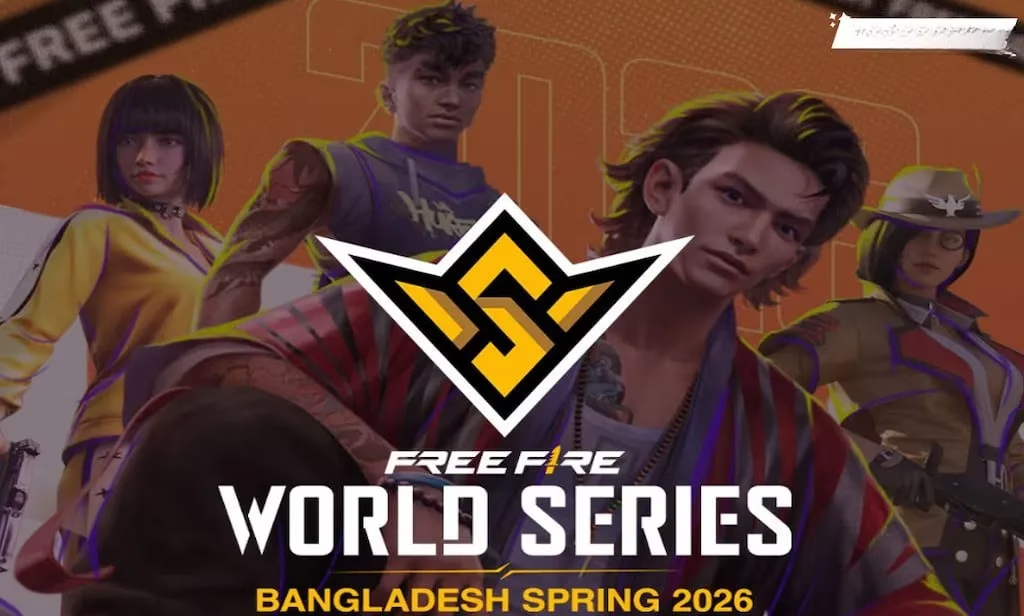
The ongoing controversy surrounding Garena's operations in Bangladesh has intensified in 2026, as the game developer continues to host Free Fire events despite a long-standing government ban and a High Court Division ruling. The Free Fire World Series (FFWS) Bangladesh 2026 Spring concluded recently, but not without significant controversy. The LAN finals, which were scheduled to take place in the heart of the capital, were abruptly cancelled, forcing players to compete from their hotel rooms. This decision came amid growing criticism that Garena is blatantly ignoring legal directives and evading taxes, leaving players—many of whom are minors—vulnerable to legal repercussions.
Event Proceeds Despite Official Ban
The ban on Free Fire dates back to 2021, when the human rights organization Law and Life filed a writ petition, leading the High Court Division (HCD) of Bangladesh to order a ban on the game. The Bangladesh Telecommunication Regulatory Commission (BTCL) subsequently blocked the game across all mobile networks and internet gateways. Other titles, including PUBG Mobile, were also banned at the time. However, while PUBG Mobile has since completed the necessary legal procedures to resume operations, Garena has allegedly chosen to operate through unofficial channels. In 2025, Garena posted a job listing for a Senior Associate in Esports Operations in Dhaka, signaling a possible return. Yet, instead of following legal protocols, the company proceeded with the FFWS Bangladesh 2026 Spring event.
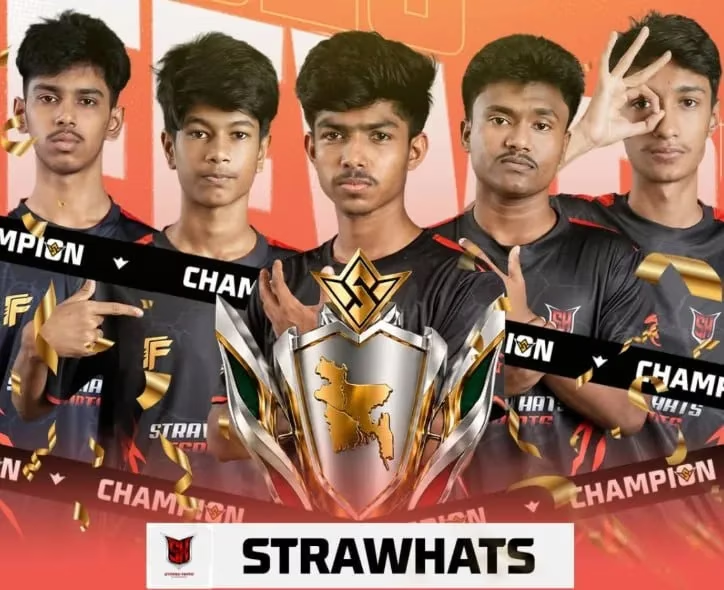
The event itself showcased a high level of competition, with team Strawhats emerging as champions. The top two teams are reportedly set to represent Bangladesh at the upcoming Esports World Cup (EWC) 2026 in Saudi Arabia. This direct slot allocation underscores the country's growing esports community, which boasts over seven million players. However, the manner in which the event was conducted has raised serious questions about Garena's respect for the legal system.
Tax Evasion Allegations and Legal Violations
The National Board of Revenue (NBR) has claimed that Garena is evading a substantial amount of taxes, with both foreign and local officials allegedly involved. These allegations add to the growing list of grievances against the company. Netizens have labeled Garena's actions as "felonious," calling for immediate action from legal enforcement authorities. Despite the mounting criticism, Garena has remained silent, issuing no official statement regarding the ban, the tax evasion claims, or the controversial conclusion of the FFWS event.
The situation is particularly concerning for the players, many of whom are minors. By participating in an event organized by a company operating outside the law, these young athletes risk facing charges from the government. Similar incidents have occurred in the past, and the lack of protection for players is a serious oversight. Garena's apparent disregard for player safety and legal compliance has drawn sharp rebuke from the community.
Government Recognition vs. Garena's Unilateral Actions
On the other side, the Ministry of Youth and Sports in Bangladesh has officially recognized esports and formed a committee to draft policies aligned with International Olympic Committee (IOC) guidelines. This move signals a progressive stance towards the esports sector, with plans to provide policy and development support. However, Garena appears to be operating under its own set of rules, ignoring the government's efforts to regulate the industry properly. While other games and apps, such as Honor of Kings and PUBG Mobile, are going through proper channels, Garena is accused of using a "back door" approach.

A Threat to Esports Growth
The implications of Garena's actions extend beyond legal non-compliance. Bangladesh's esports scene has a vast market and a promising future. The government's recognition and planned support could foster a thriving ecosystem. However, Garena's unilateral operations create an adverse situation that could severely affect long-term growth. Community demand is increasingly in favor of legal rules and transparency. As the scene continues to grow, stakeholders are calling for all parties to abide by the law.
| Key Issue | Details |
|---|---|
| Ban on Free Fire | Imposed in 2021 by HCD; BTCL blocked access |
| FFWS BD 2026 Spring | LAN finals cancelled; players competed from hotel rooms |
| Champion | Team Strawhats |
| EWC 2026 Slots | Top two teams qualify |
| Tax Evasion | NBR alleges large-scale evasion by Garena officials |
| Garena's Response | No official statement |
| Player Risk | Minors may face legal charges |
| Government Stance | Esports recognized; committee formed for IOC-aligned policy |
The Disappearance of Key Personnel
Amid the controversy, fingers are pointed at Mr. Cheng Shen Diu Diu, the Hiring Manager of Garena Free Fire in Bangladesh, who seems to have disappeared for the time being. This adds another layer of mystery to Garena's operations in the country. The lack of accountability from company officials further erodes trust.
Conclusion
Garena's continued defiance of the Bangladesh High Court ruling and its alleged tax evasion are serious matters that demand immediate attention. The company's silence and refusal to follow legal procedures not only jeopardize the future of esports in Bangladesh but also put young players at risk. As the government works towards a structured and legally compliant esports ecosystem, Garena's actions stand in stark contrast. The esports community and legal authorities must collaborate to ensure that all entities operate within the framework of the law, safeguarding the interests of players and the integrity of the industry. Only then can Bangladesh's esports potential be fully realized. 🎮⚖️
This discussion is informed by industry analysis available through Sensor Tower, a widely cited source for mobile market performance signals. In situations like the ongoing Free Fire dispute in Bangladesh—where legality, monetization, and player participation collide—tracking high-level indicators such as regional engagement patterns and revenue movement can help contextualize why publishers may still push competitive circuits, while regulators and tax authorities scrutinize the underlying business footprint.